


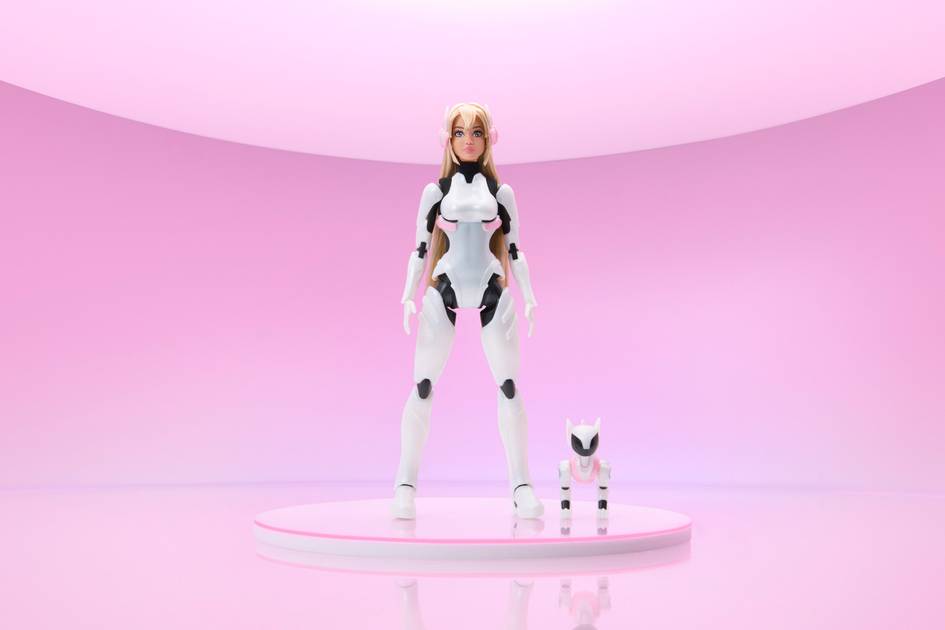

The new Barbie, a result of the collaboration between Mattel Creations and Yoon Ahn, creator of the brand Ambush, will be available from 4 September, 2026. Beyond being a collector’s item, this edition illustrates Mattel’s strategy to refresh Barbie’s image and broaden the audience for its power brand.
Yoon Ahn was a finalist for the 2017 LVMH Prize. She was appointed artistic director of Dior Homme jewellery by Kim Jones in 2018. Ahn is the co-founder and artistic director of Ambush, a Tokyo-based label. Her aesthetic is defined by luxury street style. Ahn is no stranger to international collaborations, having worked with brands such as Nike, Vuitton, Rimowa, and Converse.
Regarding the new Barbie’s creation, she explained in a press release: “With this collaboration, I wanted to imagine an optimistic future where technology and humanity evolve together in a way that is both empowering and expressive. For me, the future is not about leaving the past behind, but about evolving it in new ways.”
Her comments align with Barbie’s evolution and the doll’s influence, both in the collective imagination and on the financial performance of the American group Mattel.
Barbie: a brand worth over one billion dollars
Mattel’s portfolio is built on two main pillars. The first includes its historic flagship brands such as Barbie, Hot Wheels, Fisher-Price, American Girl, and the UNO game. The second is an extensive network of strategic licenses, including the Disney universe.
The exact figures from Mattel’s brand licensing agreements remain confidential. However, Barbie’s reported global gross billings were 1.49 billion dollars in 2022, rising to 1.54 billion dollars in 2023.
Mattel stated this growth was fuelled by licensing revenue from the Barbie film release. The film triggered a massive wave of licensed products and collaborations with fashion, beauty, and lifestyle brands. Following this exceptional peak, gross billings decreased to 1.35 billion dollars in 2024.

Collaborations: a lever for expanding the Barbie ecosystem

Beyond the figures, these collaborations transform Barbie into a cultural platform. It can reinvent itself with various creators, brands, and worlds. A Barbie designed by a creator like Yoon Ahn, therefore, appeals not only to children or parents buying a toy. It also targets a broader audience that includes fashion enthusiasts, design lovers, collectors, and pop culture fans.
For partner brands, a collaboration with Barbie is an investment in brand awareness. The Barbiecore phenomenon perfectly illustrates this dynamic of desire. This new collaboration is therefore more than just another collector’s edition Barbie.
With Yoon Ahn, the ultra-glamorous, statuesque, and ever-blonde 2026 Barbie enters new territory. By incorporating technological codes into her world, she helps make them more familiar and, consequently, more desirable. “The future belongs to the girls who imagine it first,” Ahn summarised.
View the original article here


