


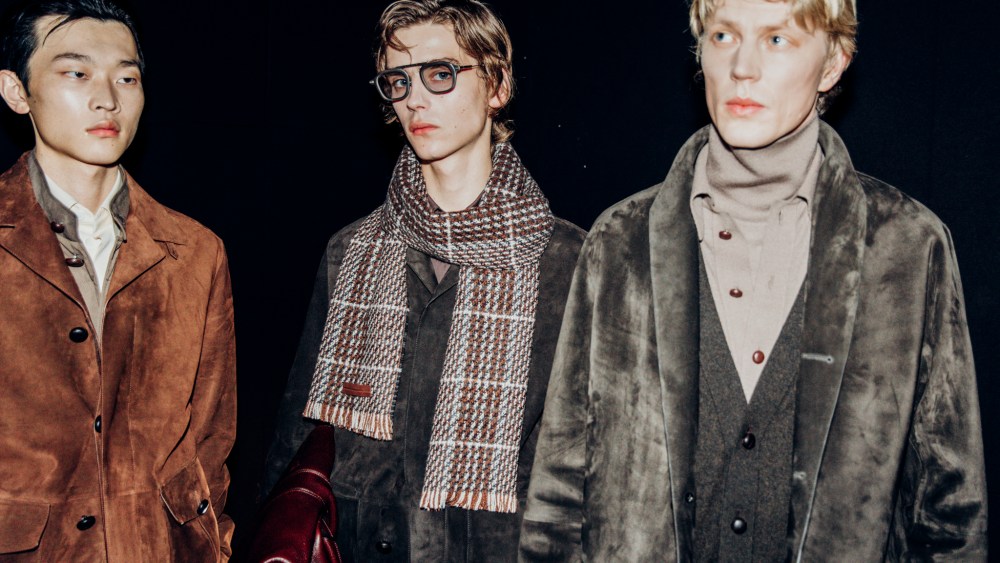

MILAN — Quiet luxury may be quieter, especially in trending news cycles, yet demand for high-quality, smart-casual essentials has appeared resilient, especially among affluent male consumers globally.
Google Trends data show that online searches for “quiet luxury” first surged in 2023, perhaps as fashion customers sought reassurance in response to increasingly chaotic news cycles.
After stabilizing, interest jumped again in 2026, with year-to-date searches rising 150 percent.
This has helped some specialists outperform the broader luxury slowdown in the first half of the year — and dodge the headwinds throughout the past two-year period of declining and sluggish sales for the sector.
Sales of luxury goods at large have shown early signs of a rebound, albeit at a slow pace, but some luxury players were already better positioned.
As the Ermenegildo Zegna Group posted a strong set of results for the second quarter ended June 30, the flagship Zegna men’s brand saw like-for-like sales jump 16.9 percent to 324.2 million euros. Revenues grew 11.2 percent in the first half of the year at the Italian luxury brand.
Similarly, at Brunello Cucinelli, where menswear accounted for 48.5 percent of sales and apparel 83.3 percent in the first half, revenues increased 9.5 percent in the period, as the sales campaign for the men’s spring 2027 collection neared completion, the company said.

Brunello Cucinelli men’s fall 2026
Courtesy of Brunello Cucinelli
Luxury bellwether LVMH Moët Hennessy Louis Vuitton’s key fashion and leather goods division broke a two-year losing streak, posting a 1 percent revenue increase in the three months to June 30, with quiet luxury stalwart Loro Piana outperforming fellow brands in the division.
Smaller, independent players in that league have also benefited from the enduring appetite for ultra-luxurious clothing that does not scream wealth.
Last June, Canali’s chief executive officer Stefano Canali told WWD that in the first five months of 2026 the brand logged a more than 16 percent jump in sales, while Kiton CEO Antonio De Matteis said the company saw “more than a double-digit growth in the first quarter.”
Caruso — which earlier this year was acquired by MondeVita Italy Srl, part of Mondevo Group, from Lanvin Group — posted sales of 35 million euros in 2025, with the Caruso brand growing slightly. Its CEO Marco Angeloni is confident there is space for further improvement.
“In the next three years, we want to more than double the Caruso brand, and we think we can do that easily,” Angeloni said earlier this year.

Caruso men’s spring 2027
Courtesy of Caruso
At Herno, first-half retail sales jumped 15 percent across geographies. Ditto for Eleventy, with CEO Marco Baldassari saying the brand is on track to increase revenues by 15 percent this year, on the heels of a 25 percent gain in 2025 over 2024 to 125 million euros, while Moorer, which logged sales of 54 million euros in 2025, up 8 percent year-over-year, expects the 2026 fiscal year ending Feb. 28, 2027, to see an increase of 18 percent to 64 million euros.
The muted, easy-to-approach aesthetic these brands have in common has continued to win consumers over. Will momentum hold in the second half?
Consumer insights — and executive’s optimistic outlooks — suggest it will.
Luxury customers are growing more selective, hence the quality of products remains paramount.
Claudia D’Arpizio — newly named chair Italy of Bain & Co., global leader of the firm’s fashion and luxury practice, and lead author of the latest Bain-Altagamma Luxury Goods Worldwide Market Study, written with Bain & Co. partner Federica Levato — characterized consumers as “increasingly more conscious, knowledgeable, picky and choosy, and they choose what they want to buy, with meaning, and this is causing winners and losers.”
“They have less tolerance toward disappointing products and experiences,” D’Arpizio said.
That viewpoint was corroborated by the 12th True-Luxury Global Consumer Insights study by Boston Consulting Group and Altagamma released earlier this year. The research found that design, heritage, craftsmanship and timelessness will remain key purchase drivers, for both high-spenders and aspirational consumers.
These attributes ranked the highest among all drivers, the study found, trumping almost all the others — including status, logo visibility and the creative director.
Quiet luxury players have largely done without the latter or cemented long-standing relationships with creative heads who heavily focus on product development and on building consistency rather than imprinting their own style viewpoint or seek to ride trends.

Canali Men’s fall 2026
Courtesy of Canali
Save for Zegna’s Triple Stitch mark and Loro Piana’s logoed baseball hat — which has been selling strongly for a good five years since character Kendall Roy of “Succession” sported a logo-less cashmere version in 2021 — logos are fairly absent from these brands’ collections, or subtly incorporated, and are hardly ever a lever of storytelling.
By contrast, Made in Italy credentials, the use of exceptional fabrics and quality have been key to their unique selling proposition, across all price points.
It’s no coincidence that Loro Piana and Zegna also boast sizable textile businesses; Brunello Cucinelli has invested in the supply chain, acquiring a minority stake in cashmere specialist Cariaggi, and Herno and Kiton have built and strengthened their vertically integrated manufacturing capabilities over time.

Courtesy of Loro Piana
“Consumers are redefining the meaning of luxury and the appetite for luxury remains quite strong,” D’Arpizio said, adding that they are increasingly drawn to brands “that are consistent in their price-value equation.”
This explains why affordable luxury labels, such as Eleventy and Moorer, or Herno, also have been gaining market shares. Their competitive pricing has found a following among customers otherwise priced out by luxury megabrands.
“A brand needs authority in the eyes of the consumer, backed by strong design value, a flawless proposition and a level of quality that is evident wherever the product is made,” Claudio Marenzi, president and CEO of Herno, told WWD earlier this year.
View the original article here


