



Raja Ratan has an unorthodox expansion strategy.
The founder of the Dallas-based menswear brand Rye 51 identifies specialty stores whose owners are looking for an exit plan and assumes their leases.
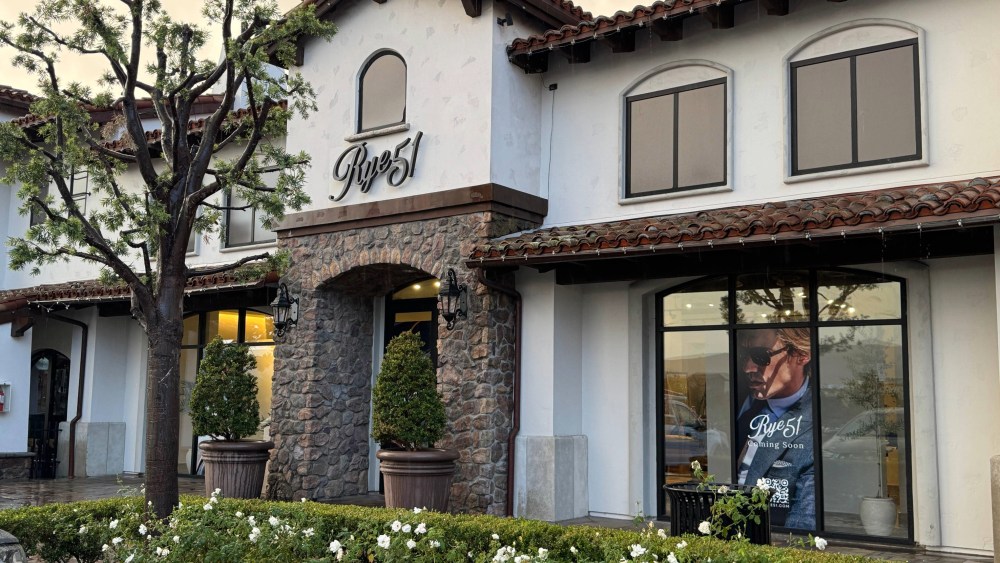
Ratan did it for the first time in Phoenix two years ago, and recently he copied the playbook in Westlake Village, Calif. But unlike other retailers who retain the names and merchandise mix of the stores they acquire, Ratan converts them into Rye 51 units.
With the Westlake Village store, his fleet now includes 11 stores in the South, Southwest and now the West Coast.
Ratan founded Rye 51 in 2003 as a custom clothing boutique. But his experience in fashion goes back further than that. “I grew up in the haberdasher business, and my family owned a small custom tailoring workshop in Hong Kong, which my first cousin still runs today,” he said. “I studied finance at the University of Texas, but one year out of college, I decided I didn’t want to sit behind a desk with spreadsheets and I wanted to pursue the clothing industry.”
So he opened the first store, a 1,000-square-foot storefront in Dallas, selling only custom shirts. But in the last two-plus decades, he’s grown Rye 51 “organically with profitability, without any significant capital raises or venture capital” into what it is today, he said. In addition to shirts, the brand offers made-to-measure suits, off-the-rack tailored clothing, sportswear and accessories.
“Pre-COVID, we were actually about 80 percent custom clothing and 20 percent ready-to-wear,” Ratan said. “Now, 60 percent of our sales are ready-to-wear and 40 percent are custom in our own stores.”

Rye 51 also has a robust wholesale business, selling its casualwear to around 120 specialty stores around the U.S.
“We love having both sides of the business,” he said.
Rye 51 offers both tailored and casualwear.
Courtesy
His own stores carry exclusively Rye 51 product, and they’re spread across Texas, Oklahoma, Arkansas, Louisiana, Tennessee, Arizona and Georgia. Ratan explained: “It’s kind of spawned outward from Dallas, which is where we’re based, so that’s why you’ll see a concentration in the Southeast.”
Nine of the stores were opened in the traditional way, as Rye 51, but the Phoenix store was formerly The Clotherie, which was actually a customer of Ratan’s. The owner was having financial trouble, and Ratan stepped in, spoke to the landlord, took over the lease and turned it into a Rye 51 store. “We kept the staff and a good percentage of the customer base,” he said, which is easier than building a business from scratch and trying to find staff.
In the case of Westlake Village, Carriere Menswear’s owner, Bob Carriere, was planning to retire and close his store, which was also a Rye 51 customer. “He wanted to hang up his cleats and didn’t have a succession plan,” Ratan said. So they made a deal, and Ratan took over the 2,475-square-foot space.
Ratan believes this way of expanding is a viable option for his future. In addition to finding retailers ready to retire or falling upon hard times, he’s open to working with merchants who may not be ready to exit their businesses immediately but are looking for a way to maintain their legacy.
“There are a lot of these one-store haberdashers out there where their kids are in law or finance or real estate or whatever,” he said. “They don’t want to take over their dad’s little one-shop operation. But they’re great businesses — there’s nothing wrong with them. They just don’t have a succession plan. And so I’m going to keep pursuing opportunities like that.”
But instead of multibrand retailers, the stores Ratan takes over will become exclusively Rye 51. Does he find this is an issue for the customers?
“We find that the things we have in our stores are not dissimilar to what [other] brands have in terms of the price point,” he said. “Certainly, you’re going to lose some of that business, but if you have a $1.5 million customer base and you can get even half of them to acclimate to your brand, it’s better than starting from zero.”
Looking to the future, Ratan still has a lot of markets on his wish list for expansion. That includes Charlotte, N.C., Greenwich, Conn., Tampa, Fla., St. Louis, Kansas City, Minneapolis and somewhere in Michigan.
And he’s not worried about managing stores across the country from Dallas. “I have an awesome management team and they travel extensively. We also hire people who are self-starters and our compensation is among the best in the industry.”
View the original article here


