



Frequently asked questions
Mehri Pourkand, MD, an aesthetic doctor and founder of Dr Mehri Aesthetics, explains, “LED red-light-therapy neck masks work by delivering low-wavelength red light deep into the skin, typically around 630 to 660 nanometers,” she says. “This stimulates the cells’ mitochondria —think of them as the skin’s powerhouses—boosting energy production, collagen, and elastin. Over time, this helps firm the skin, soften fine lines, and improve skin tone.”
Does red-light therapy help with fine lines and sagging?
“Absolutely,” says Ahmed El Muntasar, MD, an general practitioner with the UK’s National Health Service and a cosmetic doctor. “It’s clinically proven to stimulate fibroblast activity, improving skin texture, fine lines, and sagging, particularly in delicate areas like the neck and décolleté.”
Adds Dr. Pourkand, “Red-light therapy is particularly helpful for fine lines and mild sagging. It’s not a replacement for lifting procedures or more intensive treatments, but it’s brilliant as a preventative or maintenance tool. The stimulation of collagen helps plump the skin from within, softening creases and creating a more youthful texture over time. Many people use it alongside other treatments or as part of a holistic skin routine.”
Is there anyone who shouldn’t use red-light therapy?
“Red-light therapy is generally safe, but if you’re photosensitive, on certain antibiotics, or have a history of skin cancer, consult your doctor before using,” says Emma Cunningham, MD.
Ahmed El Muntasar, MD, agrees, saying, “People who are very light-sensitive or have conditions such as lupus” should steer clear of red-light therapy. “Also, those taking medications that make them more sensitive to light, such as certain antibiotics or high-dose retinoids, should be cautious,” he warns. “Anyone with potential skin cancers should also avoid it. But generally, it is safe.”

How long does it take to see results from LED red-light-therapy neck masks?
Dr. El Muntasar recommends daily use for 10 minutes, with most people seeing visible results within 4 to 6 weeks, though best outcomes are typically seen after 12 weeks. “Consistency is key with at-home devices,” he says.
What are the best LED neck devices for skin rejuvenation?
“The CurrentBody LED masks are highly recommended, particularly the one that targets the neck and décolletage,” says Dr. El Muntasar. “It emits precise wavelengths of 633 nm (red light) and 830 nm (near-infrared), making it very effective. The design of the device is super flexible, easy to wear, and simple to use. It’s the one I recommend to patients.”
In fact, every expert we spoke to favored the CurrentBody Skin Neck and Dec Perfector —hence it’s spot at number one on our list.
Can you use an LED face mask on your neck?
Not really, since face masks are designed to fit to the contours of your face and administer light at the correct distance away from your skin. A face mask wouldn’t sit snug against your neck, and therefore would not provide all the benefits it should. We’d recommend buying a specific LED neck mask if you’d like the most effective treatment.
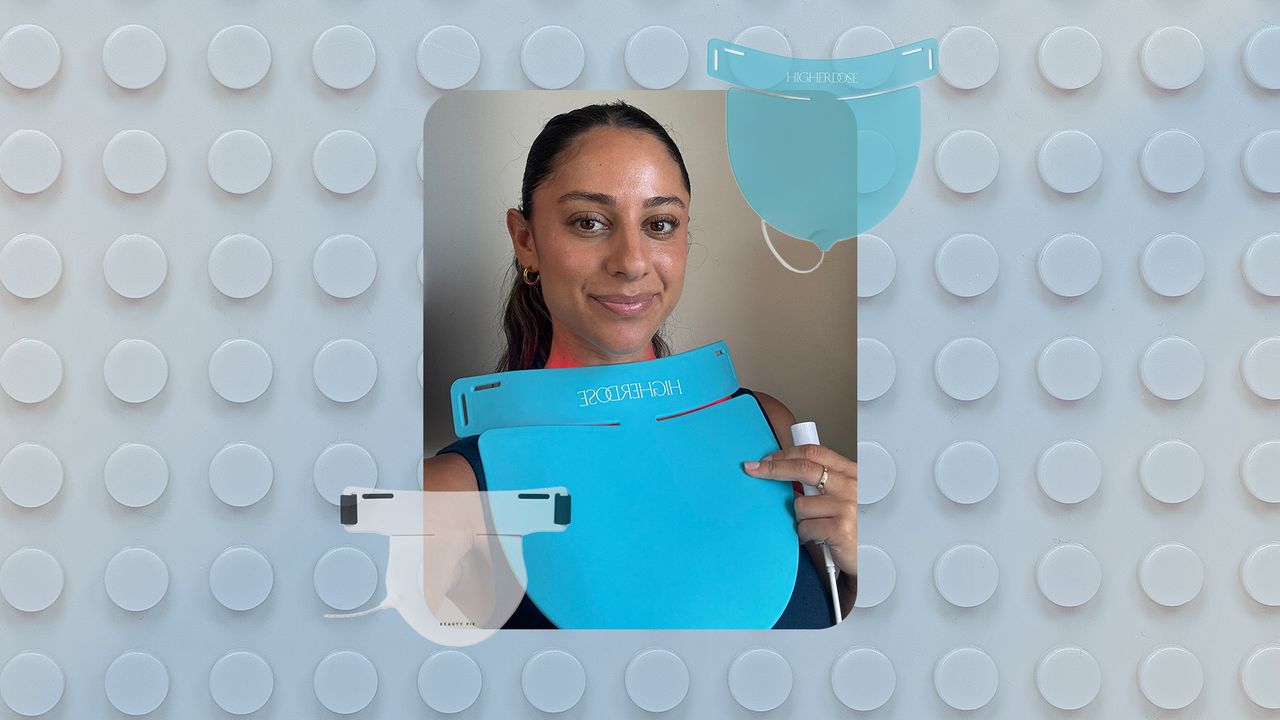
As with all at-home skin care devices, we’re particularly picky about which LED masks make it into our guides. They’re expensive, results take time, and unlike with a face serum or moisturizer, there’s a lot more to consider than whether we simply enjoyed using them. You can read more about how we test, but for this guide, we tested our LED neck device for at least a month—and will continue using it long after this guide is published to monitor any longer-term changes.
While testing, we paid close attention to whether we noticed improvements in fine lines, skin texture, firmness, and overall tone, taking before-and-after photos to track any changes that might be difficult to spot day-to-day. We also looked closely at the science behind each device, including whether it uses clinically studied red and near-infrared wavelengths, what its treatment times are, and what research supports the brand’s claims.
Fit and ease of use were just as important. The neck is a completely different shape than the face, so we considered how closely each device sat against the skin, whether it provided good coverage across the neck and décolletage, and if it slipped, dug in, or became uncomfortable during treatment. We also factored in such practical details as whether the device is wireless, how easy it is to clean and store, and whether we could realistically see ourselves using it several times a week. Finally, considering LED neck masks can cost hundreds of dollars, we weighed the results, technology, quality, and overall experience against the price to decide which devices are genuinely worth your money.
Why you can trust me
I’ve been a beauty journalist for over six years now—five years at The Mirror and more than a year at Glamour—and testing products is a huge part of my day-to-day job. No two days look quite the same: One week I’m testing the best hair growth serums and foundations, the next it’s hyaluronic acid serums, face sunscreens, or the latest beauty device claiming to transform my skin. My desk (and filming schedule) is always pretty hectic, but it does mean I test hundreds of products every year and have a pretty good idea of which launches are genuinely worth your money.
One beauty obsession I’ve very happily jumped on over the years is LED. I’ve tested everything from the best LED face masks and LED lip masks to red-light-therapy panels—one of which now permanently lives on my desk. I’ve also attended press days and launches, interviewed doctors and dermatologists, and spent the past three years regularly using my CurrentBody LED face mask at home. More recently, I headed to the CurrentBody clinic in Manchester to learn more about its LED technology, speak to experts, and experience a treatment using both the CurrentBody face and neck masks myself. I’m still learning—the technology and research continue to evolve—but I use that combination of hands-on testing, expert insight, and research when deciding which devices deserve a place in our guides.
Most importantly, I’ll never recommend a device simply because it’s popular, expensive, or has impressive marketing claims. I test products in real life, pay attention to the things I like and the things I don’t, and continue using devices long after our guides are published to see whether they hold up over time. Products can—and do—get removed from our edits when they no longer meet our standards. Every recommendation is made independently, regardless of affiliate partnerships, and we aim to test products across different skin types, tones and concerns wherever possible.
- Mehri Pourkand, MD, aesthetic doctor and founder of Dr. Mehri Aesthetics
- Emma Cunningham, MD, aesthetic doctor and founder of Dr. Emma Clinics
- Ahmed El Muntasar, MD, general practitioner with the National Health Service and cosmetic doctor
View the original article here


