



Menswear is in the middle of a noticeable shift. The rigid boundaries that once defined what men could and couldn’t wear are loosening, replaced by a more fluid, expressive approach to dressing. For Summer ’26, one of the clearest signals of that evolution is the rise of lace. Once confined to womenswear or niche occasion pieces, lace is now emerging as a legitimate, wearable fabric in the modern male wardrobe. Leading that charge is Wax London, a brand known for balancing contemporary design with everyday functionality.
This season, Wax London taps directly into that movement with a refined capsule built around its signature Didcot silhouette. The result is a collection that feels directional without being inaccessible, pushing menswear forward while remaining grounded in wearability.
At the centre of the collection is the Didcot shirt, a staple in Wax London’s lineup, now reimagined through intricate lace constructions. Rather than leaning into overt statement dressing, the brand approaches lace with restraint, focusing on texture, breathability, and subtle detailing. It’s a smart move. The pieces feel elevated, but not theatrical, designed for real-world wear, not just runway moments.

The standout piece is the Didcot White Corded Lace Short-Sleeve Shirt (£195). Crisp and clean, it offers a sharper interpretation of the trend. The corded lace adds depth and structure, preventing the fabric from feeling overly delicate, while the bright white finish enhances its summer appeal. It’s the kind of shirt that works just as well styled with tailored trousers for an evening setting as it does with relaxed shorts during the day. Worn open over a vest or buttoned up as a standalone piece, it delivers versatility alongside visual impact.
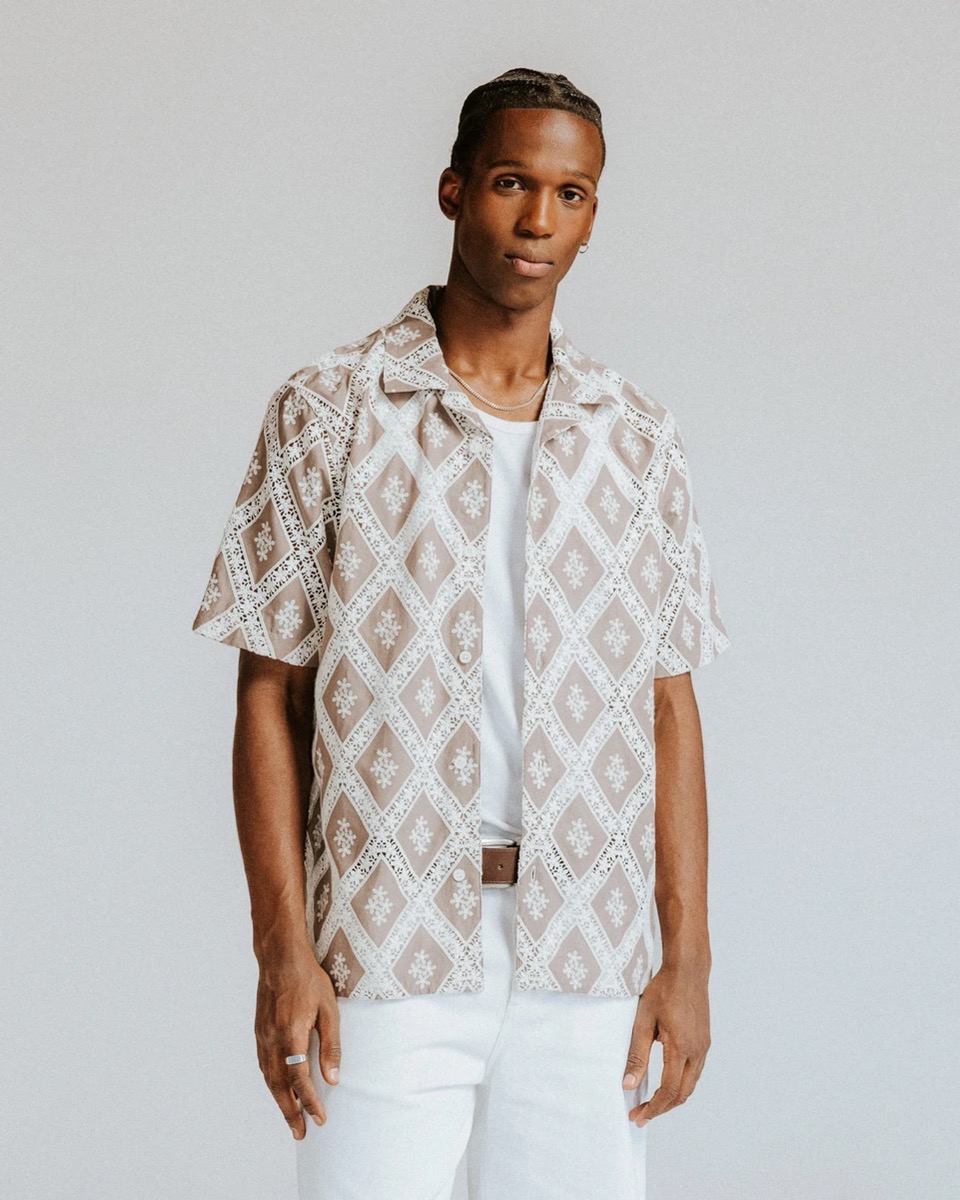
Alongside it, the Didcot Taupe and Ecru Diamond Lace Short-Sleeve Shirt (£225) offers a softer, more understated take. The tonal colour palette makes it instantly wearable, while the geometric diamond pattern introduces texture without overwhelming the look. This is where Wax London’s design sensibility really comes into play. Instead of pushing lace as a bold statement, the brand integrates it into a neutral, everyday wardrobe — making it feel natural rather than forced.

What makes these pieces particularly relevant now is how they reflect a broader cultural shift within menswear. Lace is no longer subversive. It’s progressive. It speaks to a generation that values individuality over outdated rules, where fabric choice becomes another tool for self-expression rather than a limitation. In that sense, Wax London isn’t just designing clothing, it’s responding to a change in how men want to present themselves.
There’s also a strong functional argument for lace, especially in summer. Breathability has always been a key concern during warmer months, and lace offers a solution that doesn’t sacrifice style. The open weave allows for natural ventilation, making these shirts as practical as they are visually interesting. In a market saturated with basic cotton tees and linen shirts, lace introduces something genuinely different.

Styling-wise, the collection opens up a range of possibilities. The white corded lace shirt pairs effortlessly with darker tailoring for a high-contrast look, ideal for summer events or evening occasions. Meanwhile, the taupe and ecru version leans more casual, sitting comfortably with loose trousers, denim, or even swim shorts for a holiday setting. Both pieces carry enough presence to anchor an outfit without requiring heavy layering.
For readers looking to explore how fabrics and textures are shaping the season, you can read more on Wax London here.

Ultimately, Wax London’s Summer ’26 lace collection succeeds because it understands balance. It doesn’t overstate the trend or dilute it into something unrecognisable. Instead, it refines lace into something modern, masculine, and genuinely wearable. These are pieces that invite experimentation without demanding it, offering a subtle shift in how men can approach their wardrobes.
As menswear continues to evolve, collections like this signal where things are heading: towards a more open, expressive, and texture-driven future. And if lace is any indication, that future is looking a lot more interesting.
View the original article here


